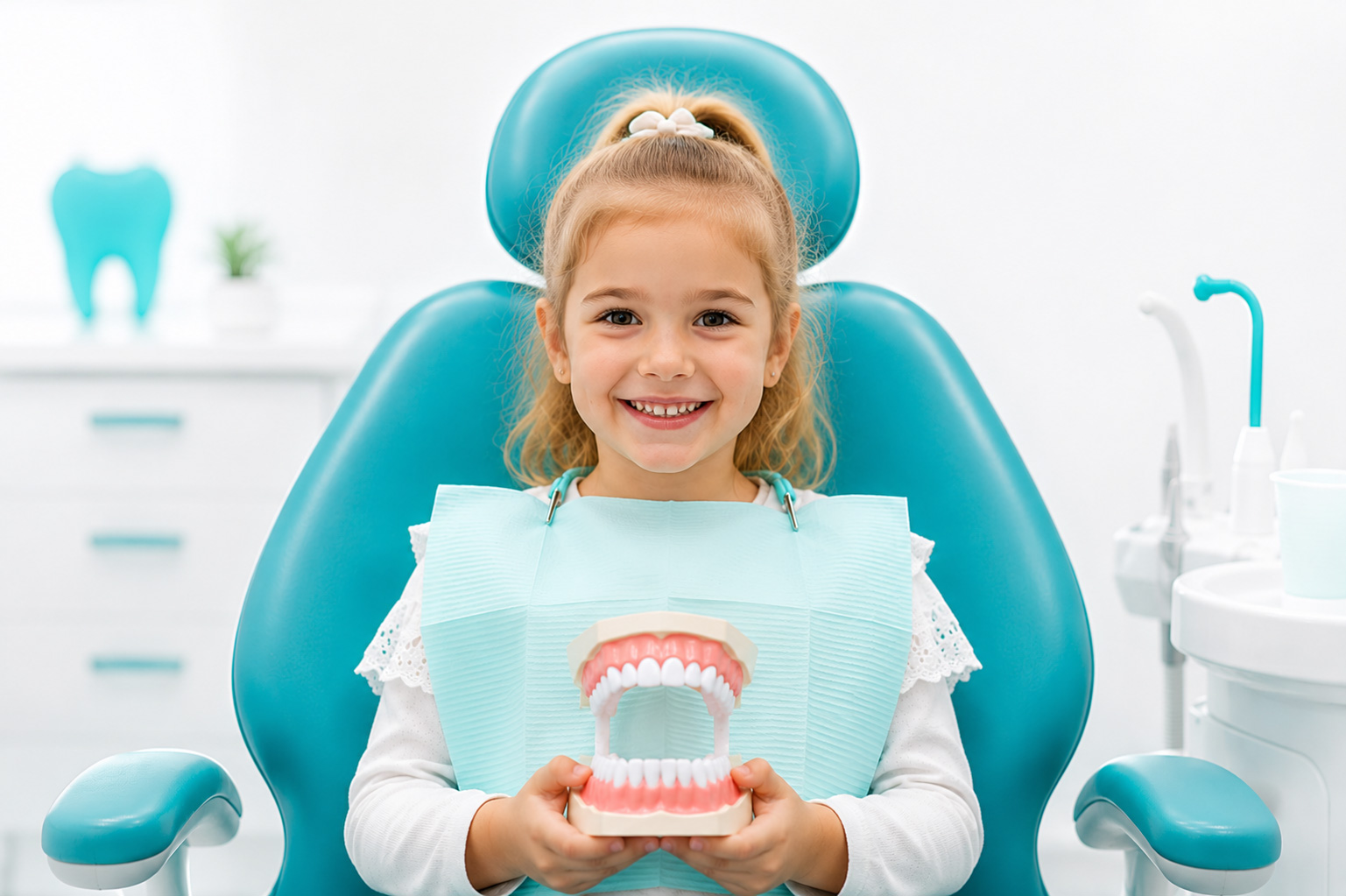
Pediatric dentistry is the branch of dentistry that monitors the oral, dental, and jaw development of children from birth through the end of adolescence, and encompasses preventive, protective, and curative practices. Pediatric dentists working in this field do not only provide dental treatment; they also help children develop oral care habits and overcome their fear of the dentist.
Many parents may neglect their children's dental care, assuming baby teeth will be replaced anyway. In fact, baby teeth are of great importance for nutrition, speech development, healthy formation of the jaw structure, and acting as space maintainers for permanent teeth. For this reason, taking children for regular dental check-ups helps prevent many problems that could arise later.
What Is Pediatric Dentistry?
Pediatric dentistry is the dental specialty concerned with the oral and dental health of children from infancy through adolescence. Pediatric dentists apply treatment methods appropriate to the child's age and developmental level, aiming both to protect oral health and to make the dental experience a positive one.
Treatments applied to pediatric patients are planned differently than those for adults, because the child's jaw development, the condition of baby teeth, and psychological needs must all be taken into account.
The main goal of pediatric dentistry is not only to treat existing problems but to prevent dental diseases before they occur.
When Should Children First See a Dentist?
Experts recommend that the first dental examination take place after the first tooth erupts, or at the latest by age 1.
Thanks to check-ups performed early on;
- The tooth eruption process is monitored.
- Feeding habits are evaluated.
- Parents are informed about oral hygiene.
- Possible developmental problems are detected early.
Having the first examination serve only as a check-up makes it easier for the child to get used to the dentist and can help prevent anxiety from developing in the future.
What Treatments Does Pediatric Dentistry Cover?
Pediatric dentistry is not limited to cavity treatment. This specialty area covers many different services, from preventive applications to trauma treatments.
The main treatments applied within pediatric dentistry are as follows:
- Pediatric dental examination
- Baby tooth fillings
- Root canal treatment in children (pulpotomy and pulpectomy)
- Tooth extraction
- Fluoride applications
- Fissure sealants (protective fillings)
- Space maintainer applications
- Treatment of dental trauma
- Evaluation of teeth-grinding habits
- Preventive oral and dental health education
Since every child's oral structure is different, the treatment plan is prepared individually.
Why Are Baby Teeth So Important?
One of the most common misconceptions is that baby teeth do not need to be treated because they are temporary. In fact, baby teeth play very important roles in a child's healthy development.
The main functions of baby teeth are as follows:
- They enable chewing function.
- They support speech development.
- They guide permanent teeth.
- They contribute to jaw development.
- They support aesthetic appearance.
- They act as space maintainers for permanent teeth.
Baby teeth lost early can cause orthodontic problems in later years.
Preventive Dentistry Practices
One of the most important goals of pediatric dentistry is to prevent tooth decay before it occurs. Various preventive applications are performed for this purpose.
The most common of these are fluoride applications and fissure sealants.
Fluoride applications strengthen tooth enamel and reduce the risk of decay, while fissure sealants protect the grooved surfaces of molars in particular, helping prevent bacteria from accumulating in these areas.
These applications are painless and can be completed quickly.
How Can Fear of the Dentist Be Prevented in Children?
A child's dental experience can directly affect their attitude toward oral health in the future.
Having the first examination take place at a time when no pain or treatment is required makes it easier for the child to get used to the clinic.
It is also very important for parents to avoid frightening language, to prefer a positive tone, and to present the dental visit as a natural health check-up.
Pediatric dentists aim to make the treatment process more comfortable and safe by communicating with children in a manner appropriate to their age.
What Should Be Paid Attention to in Order to Protect Children's Dental Health?
Regular care habits must be instilled at an early age in order to protect children's oral and dental health.
The main points to pay attention to are as follows:
- Teeth should be brushed at least twice a day.
- Age-appropriate fluoride toothpaste should be used.
- Consumption of sugary food and drinks should be limited.
- Regular dental check-ups should be carried out.
- Preventive fluoride applications should be considered.
- Fissure sealant applications should not be neglected.
- Thumb-sucking and prolonged pacifier use should be monitored.
- In case of trauma, a dentist should be consulted without delay.
Correct habits acquired at an early age also contribute to the protection of oral health in adulthood.
How Often Should Children Have Dental Check-ups?
Although each child's decay risk and oral structure differ, a regular dental check-up every 6 months is generally recommended.
Check-up intervals may be shorter for children with a high risk of decay or those requiring orthodontic follow-up.
Regular check-ups allow cavities to be noticed early, tooth development to be monitored, and preventive applications to be carried out in a timely manner.
Conclusion and Assessment
Pediatric dentistry is an important dental specialty that aims not only to treat children's existing dental problems, but also to help them gain lifelong healthy oral and dental habits. Regular dental check-ups performed at an early age are of great importance for protecting baby teeth, ensuring the healthy development of permanent teeth, and preventing possible orthodontic problems. Parents' attention to their children's oral care and their consistent use of preventive dentistry practices will form the foundation of a healthier and stronger smile in the future.