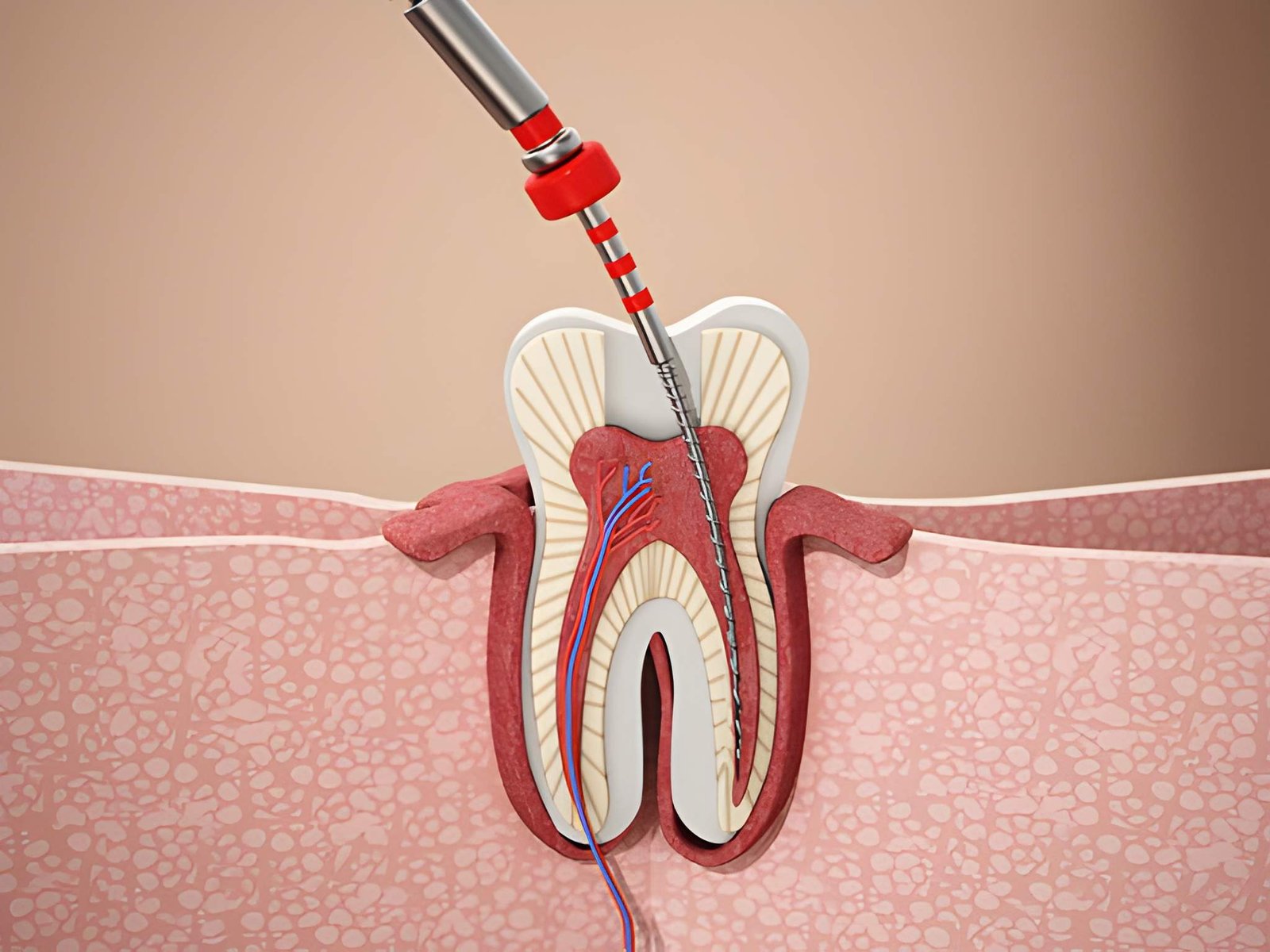
When tooth decay or trauma is not treated in time, it can affect not only the enamel but also the living tissue inside the tooth. Advanced decay may infect the nerves and blood vessels in the tooth, causing severe pain, sensitivity, and abscesses. While extraction was once a common solution, modern endodontics allows many natural teeth to be preserved with root canal treatment.
Root canal treatment removes infected or non-vital pulp tissue and fills the root canals with specialised materials. Its purpose is to eliminate infection while helping the tooth retain its role in the mouth for years to come. When performed at the right time, it preserves the natural tooth, chewing function, and aesthetic appearance.
Can every tooth be saved with root canal treatment? When is it sufficient, and when might extraction be necessary? The answer depends on the extent of the damage and the condition of the surrounding tissues.
What Is Root Canal Treatment?
Root canal treatment is a conservative procedure used when the pulp tissue at the centre of a tooth has been damaged by infection, trauma, or deep decay.
During the procedure, infected nerve and blood-vessel tissue is carefully removed. The root canals are disinfected with special solutions and filled with biocompatible materials to help prevent bacteria from returning. Finally, the tooth is restored with a filling or crown so it can function again.
With modern techniques, root canal treatment achieves highly successful outcomes and can help natural teeth remain in use for many years.
Can a Tooth Really Be Saved with Root Canal Treatment?
Yes. If enough tooth structure remains healthy and there is no severe damage to the root, root canal treatment can often save the tooth.
The primary goal is to preserve the tooth in the mouth rather than extract it. No artificial restoration or implant can fully replace every biological advantage of a natural tooth.
Although the tooth loses its vitality after treatment, it continues to function within the jawbone. A properly restored root canal-treated tooth can be used comfortably for many years.
Success rates are particularly high when the issue is identified early. It is therefore important not to delay treatment when symptoms such as pain or sensitivity develop.
When Is Root Canal Treatment Needed?
Not every toothache requires root canal treatment. However, this treatment may become necessary when infection reaches the tooth's nerve tissue.
Common situations include:
- Deep tooth decay
- Severe hot and cold sensitivity
- Toothache that disrupts sleep
- Infections at the tooth root
- Tooth fractures caused by trauma
- Teeth that have lost vitality after an impact
- Abscesses around the tooth root
- Advanced tooth wear
Every case should be planned after a detailed clinical examination and radiological assessment.
How Is Root Canal Treatment Performed?
Before treatment, the tooth is assessed with a clinical examination and X-rays. The spread of infection, number of roots, and canal anatomy are evaluated before the treatment plan is prepared.
After local anaesthesia is administered, a small access opening is made in the tooth. The infected pulp is removed with specialised instruments, and the root canals are carefully shaped and disinfected.
Once the canals are thoroughly cleaned, they are filled with a biocompatible material to create a seal. The tooth is then reinforced with a filling or porcelain crown to restore its function.
Is Root Canal Treatment Painful?
A common misconception is that root canal treatment is very painful. With today's modern anaesthesia methods, patients generally do not feel pain during the procedure.
Mild sensitivity for a few days after treatment is considered normal and can usually be managed easily with pain relief recommended by your dentist.
Root canal treatment, once known as painful, can now be performed very comfortably with modern technology.
How Many Visits Does It Take?
The length of treatment can vary according to the condition of the tooth.
Simple infections may be treated in one visit, while advanced infections or abscesses can require several. In some cases, medication is placed inside the canal and time is allowed for healing.
Allowing treatment to proceed at the appropriate pace is important for long-term success.
What Are the Benefits?
Successful root canal treatment not only relieves pain, but also helps preserve the natural tooth.
Its main benefits include:
- The natural tooth is preserved without extraction.
- Chewing function is maintained.
- Changes in tooth alignment can be avoided.
- Aesthetic appearance is protected.
- The risk of jawbone loss is reduced.
- Infection is prevented from spreading to surrounding tissues.
- The need for an implant or bridge may be delayed or eliminated.
Preserving the natural tooth is always the preferred treatment approach whenever possible.
What Should You Consider After Treatment?
Following your dentist's advice in the first days after treatment supports a positive healing process.
Important points include:
- Avoid hard foods until the anaesthetic has worn off.
- Avoid very hard foods during the first days.
- Continue regular brushing and flossing.
- Do not miss follow-up appointments.
- Strengthen the tooth with a crown when recommended.
Although a root canal-treated tooth loses its vitality, it can remain healthy and functional for many years with regular care.
How Long Does a Root Canal-Treated Tooth Last?
The lifespan of a root canal-treated tooth depends on the success of treatment, oral hygiene, and how the tooth is restored afterwards.
A tooth that is properly treated and regularly checked can remain healthy and functional for 10 or 20 years, or even a lifetime. On large back teeth, a porcelain crown may substantially extend the tooth's life by reducing the risk of fracture.
Conclusion
Root canal treatment is one of the most successful conservative dental procedures for saving natural teeth from extraction. When provided in time for teeth affected by advanced decay or trauma, it has a high success rate and can keep the tooth in the mouth for many years. Its success also depends on good oral hygiene and regular reviews. If you notice toothache, persistent sensitivity, or swelling, seeing a dentist promptly is important for preserving your natural tooth.